How the tool works
After you upload a photo, our application sends it to a generative image model through OpenAI. We ask the model to draw one straight axis through the visible head and torso of each of the two most prominent people.
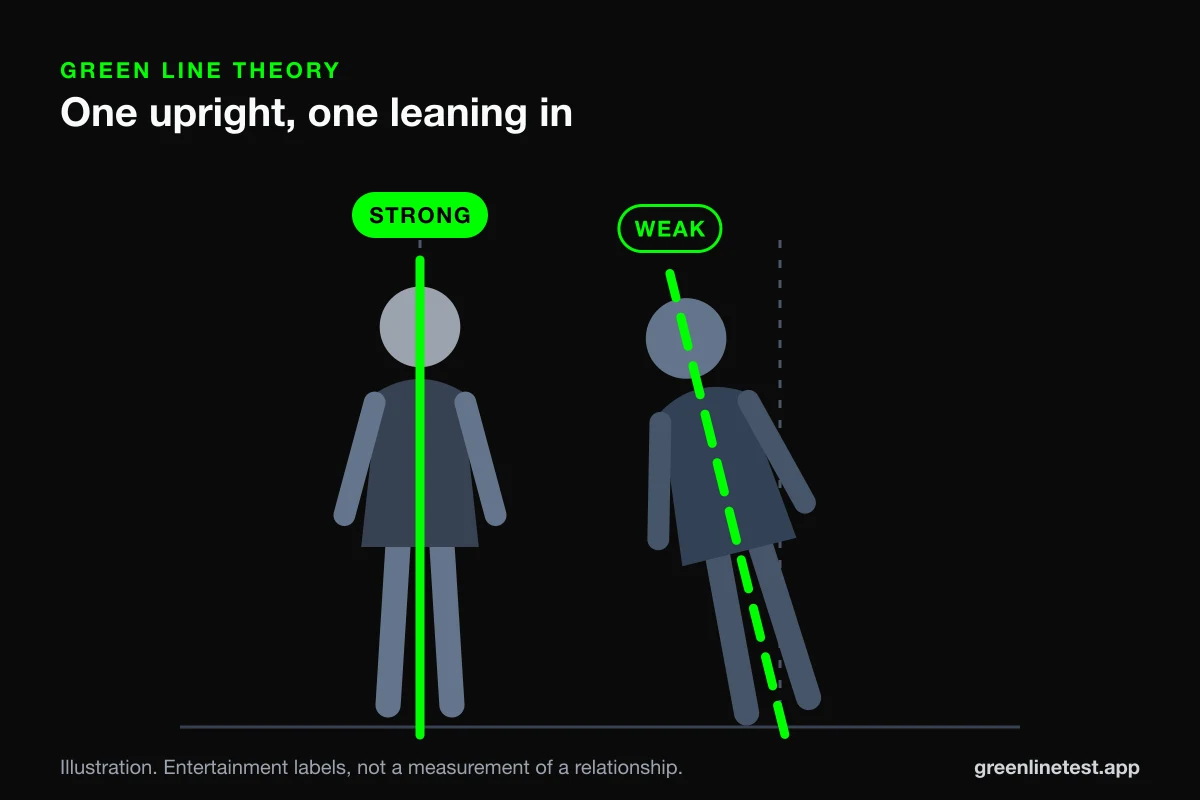
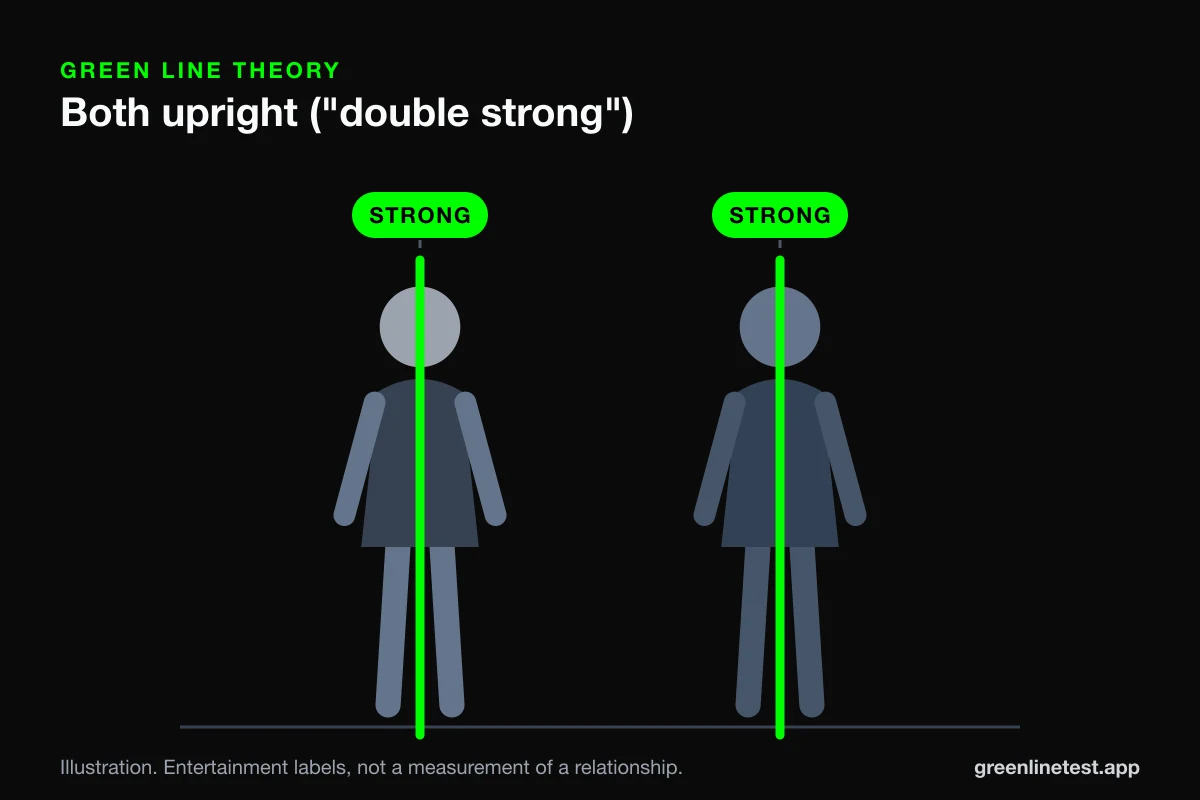
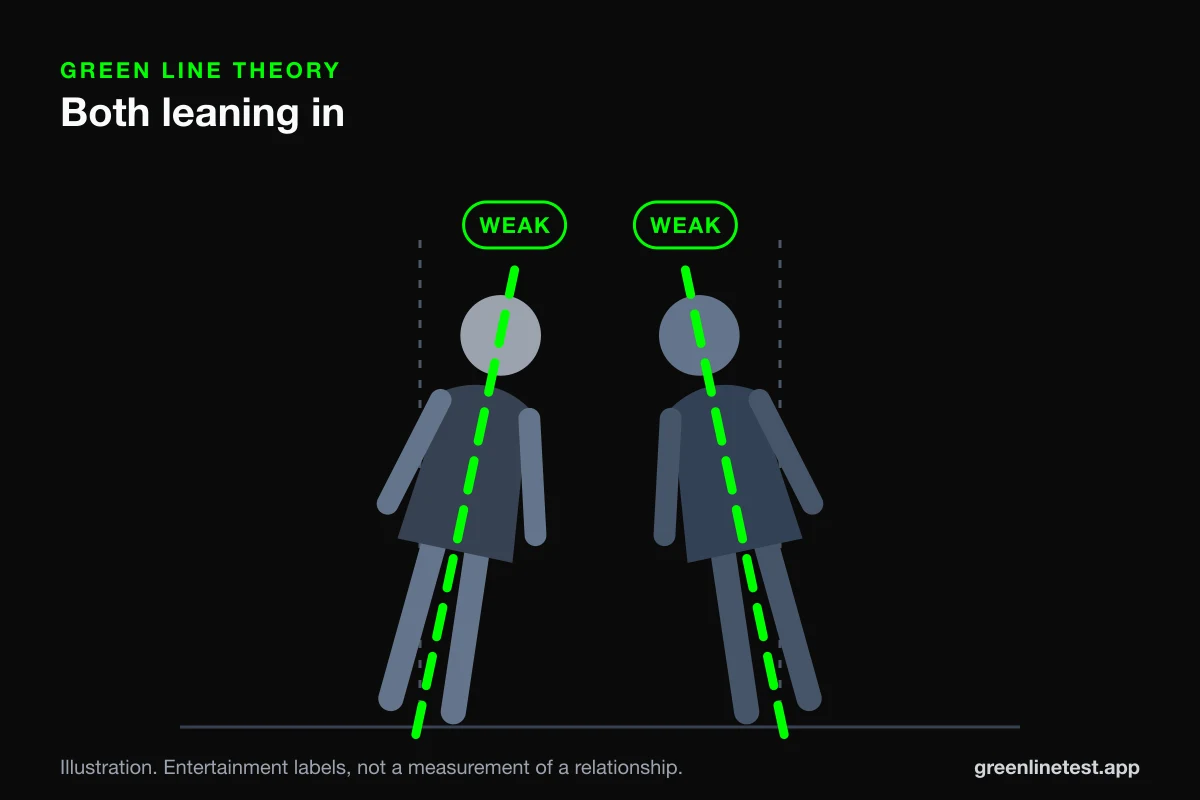
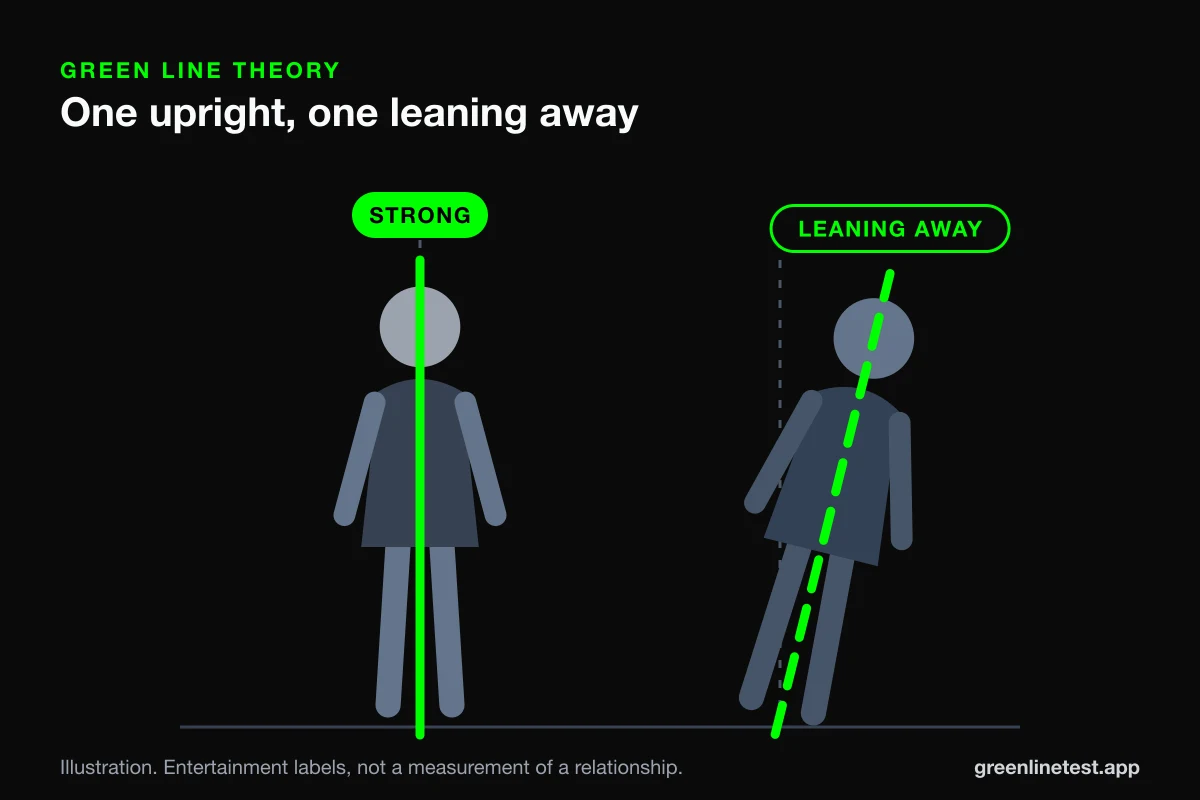
Our requested convention is a solid vertical line with a STRONG label for an upright pose, and a dashed tilted line with a WEAK label for a lean. These are entertainment labels. The system does not measure affection, personality, compatibility, or relationship power.
We ask the model to preserve the underlying photo, but generative editing can misplace lines or make unintended changes. The result is not a calibrated angle measurement. Check the edit against your original before sharing.
Accounts and pricing
AI generation on the web requires Google sign-in and purchased credits. A successful generation uses one credit. Packs start at $9.99 for 3 analyses, with watermark-free output. See current pricing and the privacy policy before using the service.
Green Line Test is also an iPhone and iPad app, Green Line Test: Couple Photo. It is a free download with the same overlay, starts with an anonymous account instead of a sign-up form, and sells its own one-time credit packs as in-app purchases, from $4.99 for 3 analyses in the US. iPhone results are watermark-free. Compare the app, the web tool, and the free manual method.
Who runs Green Line Test?
Green Line Test (greenlinetest.app) is operated by APPNOX LTD, a private limited company registered in the United Kingdom (Companies House no. 16783468). APPNOX LTD also publishes the Green Line Test iPhone app, listed on the App Store under its developer page. The website and the app are the same product. Contact Green Line Test at support@greenlinetest.app.
Who writes these guides?
The guides are published by Green Line Test, the operator of this tool. Our tool comparisons disclose that relationship. They are not independent product reviews or clinical assessments. Historical claims about the trend, such as its May 2020 origin with Rivelino and its April 2022 TikTok breakout, are sourced to archives such as Know Your Meme and to published reporting.
Sources and editorial approach
Our updated core guides separate the history of the meme, observations about a photograph, product instructions, and research findings. Research links identify their scope; a study about facial movements does not validate a relationship claim based on torso lean.
We link supporting sources near the relevant claims and list them at the end of sourced guides. Publication dates describe the original article; updated dates mark substantive revisions. Illustrations explain a visual rule and are labelled as illustrations, not presented as measured experimental results.
We do not claim a scientific relationship-prediction accuracy score or professional review that has not taken place. Read our evidence guide for what validating a claim would require.
Questions and corrections
For product questions or a correction to a guide, email support@greenlinetest.app. Include the page URL and the point you would like us to review. Please do not send private photos to report a wording or source issue.