Green Line Test
Analysis8 min read

Is the Green Line Test Pseudoscience? What Psychology Research Actually Says

We examine the Green Line Test through the lens of actual psychology research. What does science say about posture, body language, and relationship dynamics?

Published April 10, 2026 · Updated April 16, 2026

The Green Line Test Under a Scientific Microscope

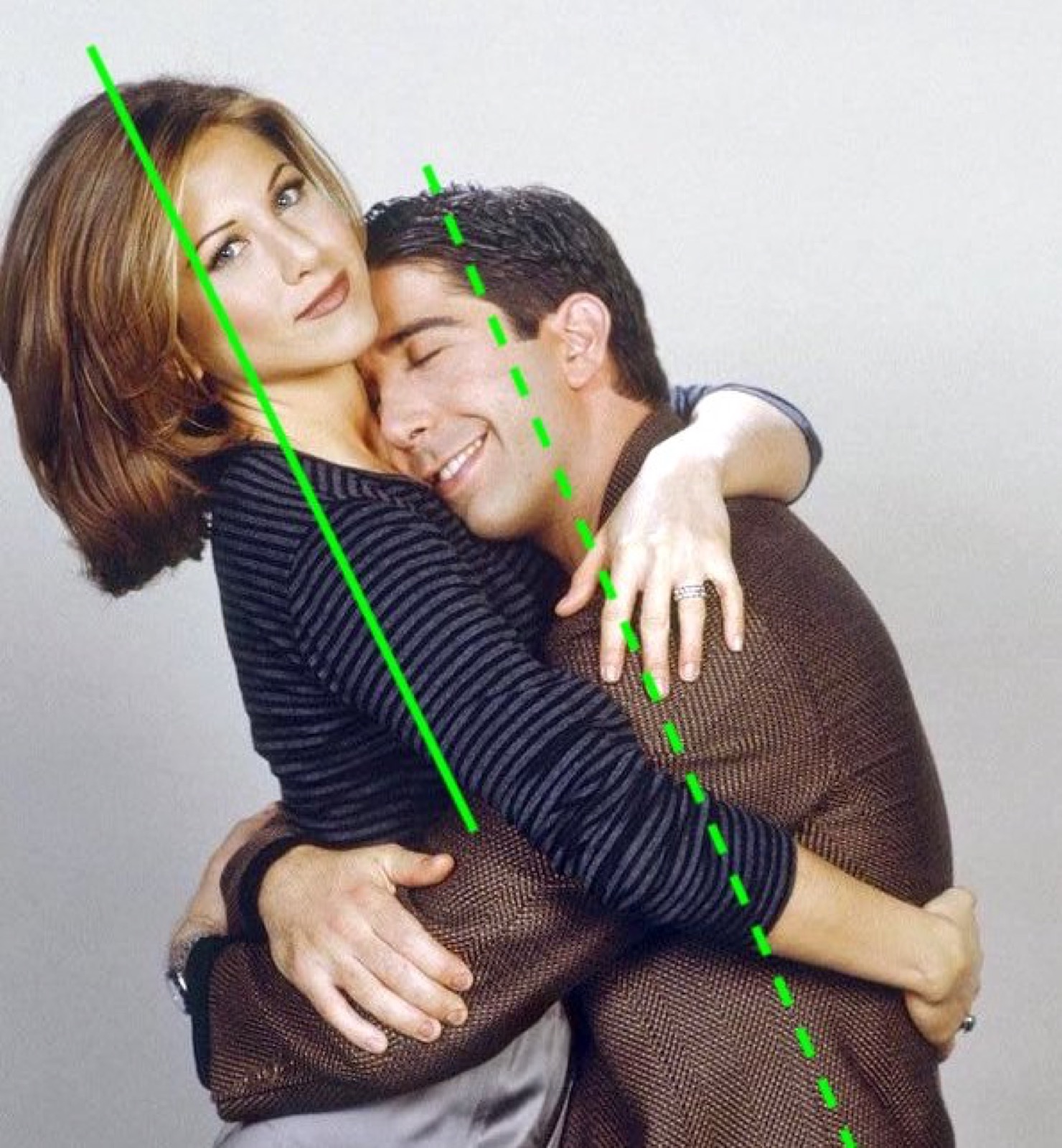
The Green Line Test claims to reveal relationship dynamics from a single couple photo. With over 500 million TikTok views, millions of people have used it to analyze their relationships. But what does actual psychology research say? Is there any science behind the green lines, or is it pure pseudoscience?

The answer, like most things in psychology, is complicated.

The Science That Supports Some Aspects

Power Posing Research

In 2010, psychologist Amy Cuddy published influential research suggesting that "power poses" — expansive, upright stances — affect testosterone and cortisol levels, increasing feelings of power and confidence.

This aligns with the Green Line Test's premise that standing straight = STRONG. An upright posture does project confidence across cultures.

However: The hormonal claims were largely debunked in replication studies. While adopting upright posture may affect self-perception, it doesn't reliably change hormone levels. The connection between posture and actual relationship power is even weaker.

Nonverbal Communication Research

Dr. Albert Mehrabian, one of the most cited researchers in nonverbal communication, found that body orientation and lean significantly influence how we perceive someone's attitude:
  • Leaning toward someone indicates liking, interest, and warmth
  • Leaning away indicates dislike, disinterest, or discomfort
  • The critical irony: Mehrabian's research directly contradicts the Green Line Test. In his framework, leaning toward your partner is a POSITIVE sign — indicating attraction and engagement. The Green Line Test labels this same behavior as "WEAK."

    Nonverbal Synchrony

    Research on couples shows that postural synchrony — when partners unconsciously mirror each other's body positions — correlates with relationship satisfaction. A 2020 meta-analysis found that synchronized movement between partners predicted both self-reported satisfaction and observer-rated relationship quality.

    This means both leaning in (mutual synchrony) is a positive indicator — yet the Green Line Test would label both people as "WEAK."

    The Science That Debunks the Green Line Test

    Expert Consensus

    The body language expert community has reached near-unanimous consensus: the Green Line Test is not a valid analytical tool.

    Dr. Lillian Glass (body language expert, appeared on major networks): *"It's simply not true."* Joe Navarro (former FBI agent, 25+ years in behavioral analysis): *"Rubbish. There is no science to support it. Reliable body language analysis requires observing clusters of behaviors over time — not a single postural cue from one photo."* Blanca Cobb (body language expert): *"It's a mistake if you're judging a relationship based on one photo."* Traci Brown (ranked among top 3 body language experts globally): Points out there are 50,000+ analyzable body language elements. The Green Line Test uses one. Vincent Denault (nonverbal communication researcher): Called the test *"nonsensical"* and *"contradictory to decades of scientific research."* Janine Driver (Body Language Institute president): The only expert to offer a partially positive view, noting she tested it on long-term couples and "found some accuracy." However, she acknowledged this could reflect confirmation bias.

    The Single Photo Problem

    This is the most fundamental scientific critique. A photograph captures approximately 1/125th to 1/1000th of a second. Body language research consistently shows that meaningful analysis requires:

  • Multiple observations across different contexts
  • Behavioral clusters (not single cues)
  • Baseline comparison (how does this person normally stand?)
  • Temporal patterns (how does behavior change over time?)
  • A single photo provides none of these. The same couple photographed 5 seconds later might show completely different posture.

    Context Variables That Invalidate Results

    Research identifies numerous physical and environmental factors that affect posture independently of emotional state:

  • Height difference — the most common confounder
  • Fatigue — people lean more when tired, regardless of relationship dynamics
  • Alcohol — affects posture and balance
  • Medical conditions — scoliosis, back pain, pregnancy, injuries
  • Footwear — heels change center of gravity
  • Carrying items — bags shift body weight
  • Terrain — slopes create lean
  • Wind — outdoor photos in wind create lean
  • None of these factors are accounted for in the Green Line Test.

    Confirmation Bias

    Psychologists identify confirmation bias as the primary reason the Green Line Test seems to "work":

  • People apply the test to couples with known outcomes (celebrity breakups)
  • When results align with the outcome, the test is "confirmed"
  • When results don't align (Beckhams, Obamas), they're forgotten or explained away
  • This creates a false sense of accuracy
  • Research on cold reading — techniques used by psychics and mentalists — shows that simple, universal statements feel personally accurate due to the Barnum effect. "One partner leans more than the other" applies to virtually every couple photo, making the "reading" feel insightful when it's merely obvious.

    The Gender Bias Problem

    Academic research has identified a gender dimension to the Green Line Test:

    Simon Copland (PhD sociology): Observed that men often use *"scientific language to lend legitimacy"* to gendered stereotypes. Deborah Cameron (feminist academic): Coined the term *"the new biologism"* for the tendency to frame social constructs as biological facts.

    The Green Line Test's framework assumes:

  • Standing straight = dominance = masculine = good
  • Leaning = submission = feminine = bad
  • This maps onto a worldview where showing affection is weakness and emotional distance is strength — a framework that relationship researchers have consistently identified as harmful to relationship satisfaction.

    Research by Dr. John Gottman (the most-cited relationship researcher) shows that emotional availability, vulnerability, and physical affection are predictors of relationship success, not failure.

    What Actual Relationship Science Recommends

    If you want to understand your relationship health, science offers much better tools than green lines:

    Gottman's Four Horsemen

    The four communication patterns that predict divorce with over 90% accuracy:

  • Criticism — attacking your partner's character
  • Contempt — disrespect, mockery, eye-rolling
  • Defensiveness — playing the victim, counter-attacking
  • Stonewalling — shutting down, withdrawing
  • None of these are visible in posture.

    Attachment Theory

    Your attachment style (secure, anxious, avoidant, disorganized) affects how you relate to partners. Understanding your attachment style provides genuine insight into relationship patterns.

    Bids for Connection

    Gottman's research on "bids" — small requests for attention, affection, or engagement — shows that how partners respond to these micro-moments predicts relationship trajectory better than any body language cue. The Bird Test is actually a simplified version of this research.

    The Verdict

    The Green Line Test is entertainment dressed as analysis. It uses one metric (spine angle) from one data point (a single photo) to make claims that contradict decades of nonverbal communication research.

    The scientific community's position is clear: the Green Line Test has no diagnostic or predictive value. Leaning toward someone is more likely to indicate affection than weakness. Standing straight is more likely to reflect photographer direction than relationship dominance.

    But here's the thing: it's still fun. You can enjoy the Green Line Test as entertainment while understanding it tells you nothing real about your relationship. For actual body language insights, read our guide on what experts look for in couple photos.

    Try It for Fun

    Understanding the science doesn't make the Green Line Test less entertaining. Upload a couple photo and see your results:

    Try the Green Line Test →

    Try the Green Line Test Now

    Upload a couple photo and get instant AI-powered results.

    Analyze Your Photo