
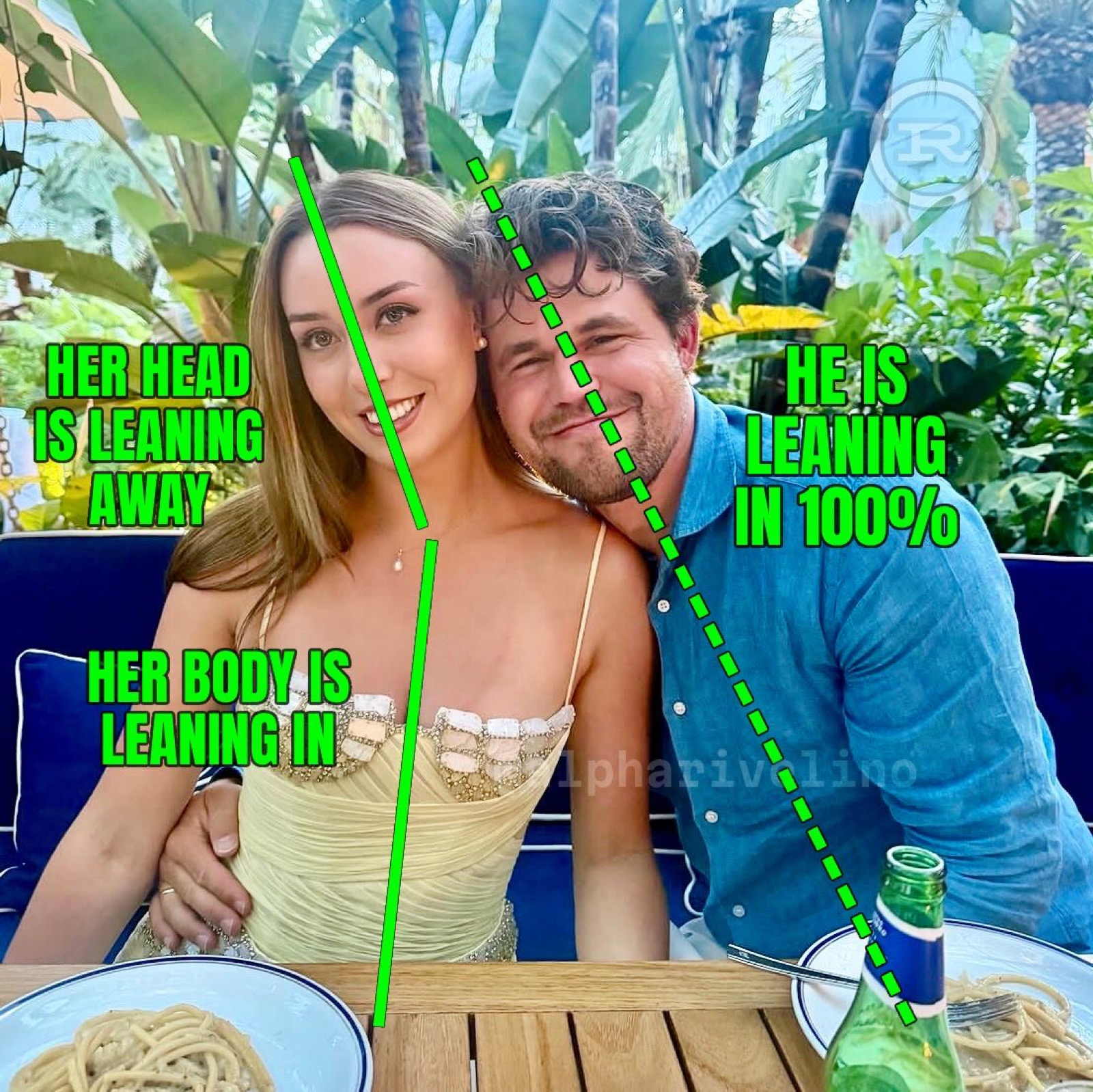
The Green Line Test Isn't Just for Couples
Somewhere along the way, the Green Line Test stopped being a couples-only game. Now people run it on their best friends, their siblings, their parents, their college roommates, and every group photo buried in the camera roll. And honestly? It might be even more fun this way, because nobody's relationship ends up on trial.
If you're new to the trend, start with what the Green Line Test actually is. The short version: you draw a straight vertical line down each person's spine in a photo, and whoever is leaning gets labeled the "weak" one while the upright person gets "strong." It went viral on couples first, but the format works on literally any photo with two or more people in it.
Why People Run It on Friends and Family
The couples version comes loaded with baggage. Run the line on your relationship photo and there's a tiny voice asking, "wait, does this mean something?" (It doesn't, and we'll get to why below.)
Run it on your two best friends and there's zero stakes. It's pure comedy. You're just discovering that your friend who "definitely doesn't care what anyone thinks" is leaning at a 30-degree angle in every single group photo.
Common non-couple targets:
- Friend groups — perfect for a group-chat callout
- Siblings — decades of birthday photos, endless leaning material
- Parents — surprisingly wholesome results
- Coworkers at the holiday party
- Sports teammates in a lineup shot
What It "Means" on Non-Couples (Basically Nothing)
Here's the honest part. On couples, the trend borrows a relationship-power story: the leaner is "more invested," the upright one "holds the frame." That framing crawled out of red-pill and "alpha male" corners of the internet, and it's worth calling out as junk. We break down why in is the Green Line Test toxic? — the theory treats a normal, warm gesture like it's a weakness.
On friends and family, even the pseudo-meaning evaporates. There's no "power dynamic" to read into your grandma leaning toward you in a photo. She's leaning because she likes you.
And that's actually what experts say leaning means in the first place. Body-language researchers like Patti Wood, Dr. Albert Mehrabian, and Dr. Lillian Glass have long noted that leaning toward someone signals warmth, comfort, and interest — not dependence or weakness. A lean is closeness, not a red flag. Our body-language experts on couple photos piece goes deeper, and none of it is diagnostic. A single frozen frame can't measure a friendship.
So when you run it on your friends, the person leaning in is usually the one who loves being around everyone. That's a compliment.
Why the Angles Are Bigger (and Funnier) With Groups
Group photos produce wilder green lines than couple photos, for boring physical reasons:
- Everyone squeezes together to fit in frame, so more people tilt inward.
- Height gaps are all over the place, which exaggerates lean angles — see height difference and the Green Line Test.
- Someone's always the anchor — the tallest person stands dead straight while three friends pile onto them.
- Candid shots mid-laugh create the most chaotic, hilarious posture.
The result is a photo where four lines fan out like a bad game of pick-up sticks. That's the good stuff.
How to Run It on Any Photo
The process is identical whether it's a couple, a trio, or your whole extended family:
- Pick a photo where you can see everyone's torso from roughly the front.
- Upload it to the Green Line Test tool.
- Let the AI find each spine and draw a line down every person.
- Read the fan-out — solid lines for upright folks, tilted lines for the leaners.
- Share it in the group chat and let chaos unfold.
For a full walkthrough, see how to do the Green Line Test, and if you want to keep it low-key, running it on your own photos covers the private version.
| Photo type | Fun factor | Actually means anything? |
|---|---|---|
| Couples | High, slightly loaded | No |
| Two friends | High, zero stakes | No |
| Group photo | Highest, pure chaos | No |
| Family/siblings | Wholesome | No |
A Few Ground Rules
Keep it kind. The whole appeal of running it on friends is that everyone's laughing together. Don't use it to actually needle someone about a relationship — that's where the trend goes sour. If you want the backstory on how it blew up, the TikTok origin story is a fun read.
Try It on Your Group Photos
Grab your funniest group photo — the more people leaning, the better — and watch how the lines fan out. It takes seconds, means nothing, and will absolutely start a group-chat argument.