
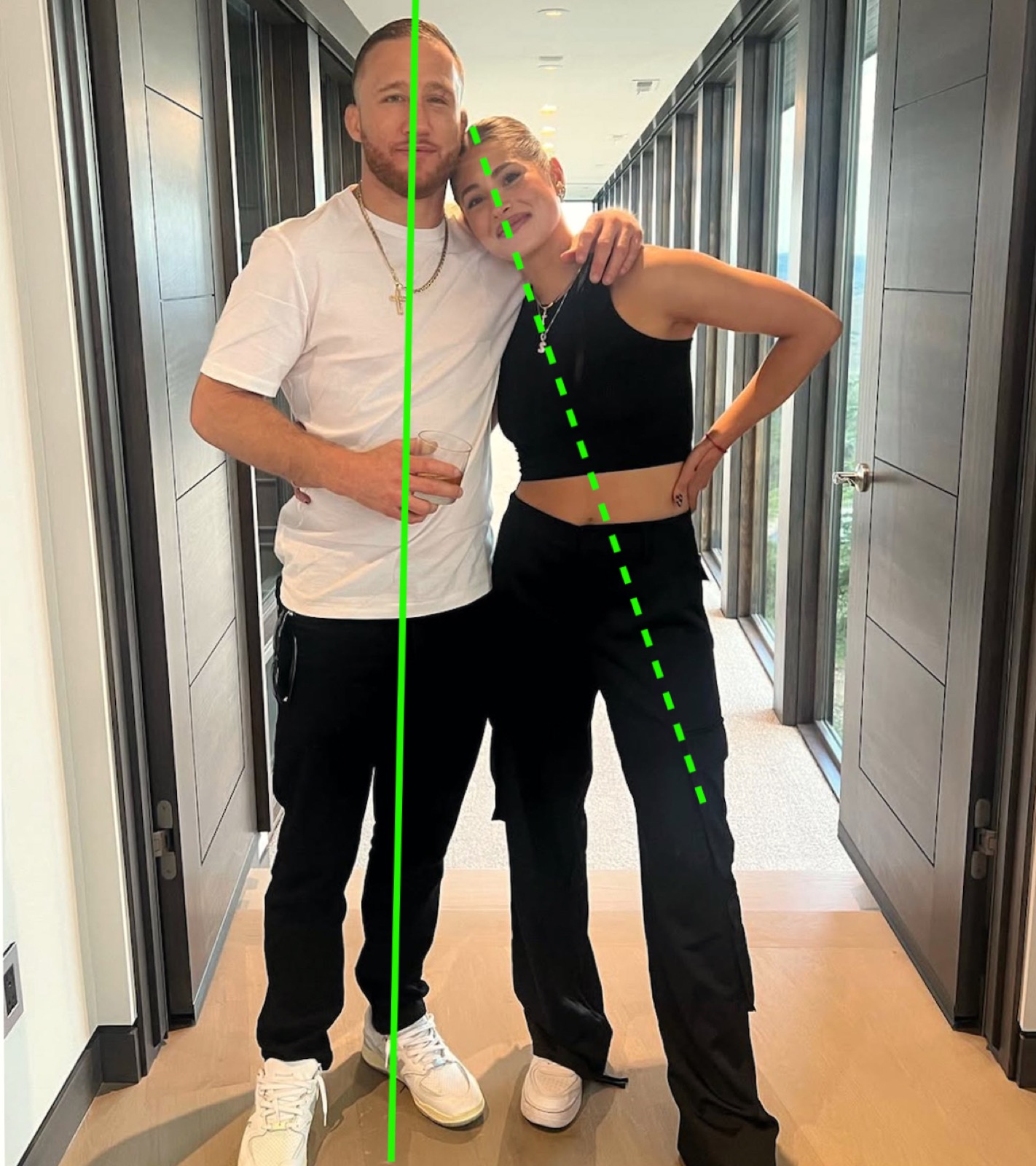
Before You Test Your Own Photos
You've seen the celebrity examples, the TikTok videos, and now you want to try the Green Line Test on your own couple photos. Before you do, here are five tips that'll give you better results — and keep you from spiraling over a silly green line.
Tip 1: Use at Least 5 Different Photos
This is the most important tip. Never draw conclusions from a single photo.
Body language experts like Joe Navarro (former FBI) and Dr. Lillian Glass consistently emphasize that a single photo captures 1/1000th of a second. The same couple can show completely different Green Line results between photos taken minutes apart.
Choose photos from different contexts:
- A candid shot at home
- A photo from a restaurant or dinner
- A vacation photo
- An event or party photo
- A photo taken by someone else (not a selfie)
If your results are consistent across 5+ photos, the pattern might mean something (probably height difference). If they vary — which they almost certainly will — it proves the test measures photo moments, not relationships.
Tip 2: Prioritize Candid Over Posed
Posed photos reflect what you (or the photographer) wanted the photo to look like. Candid photos reflect how you naturally stand.
Best photos to use:
- Photos someone took without you noticing
- Mid-conversation shots
- Walking together
- Watching something (a show, sunset, game)
- Cooking or doing activities together
Worst photos to use:
- Professional photoshoots (directed posing)
- Selfies (asymmetric by nature, one person always leans)
- Wedding/engagement photos (heavily directed)
- Red carpet or formal event photos (conscious posing)
The more natural the moment, the more genuine the body language.
Tip 3: Account for Physical Factors
Before labeling yourself or your partner "WEAK," check these variables:
- Height difference — this is the #1 confounder. If there's more than a 4-inch height gap, the taller person will almost always lean. Read our full analysis of how height affects the Green Line Test.
- Footwear — heels change posture dramatically. Compare photos where both wear similar shoe types.
- What you're holding — a bag on one shoulder, a drink, a child — all shift body weight and create lean.
- Surface — are you on a slope, stairs, or uneven ground? This creates false lean.
- What you were doing — were you reaching for something? Turning? The moment before or after the photo might explain the lean.
If you can explain the lean with a physical factor, the Green Line result is meaningless.
Tip 4: Look at the Full Picture, Not Just the Lines
The Green Line Test only measures spine angle. But your photos contain so much more information:
- Are you both genuinely smiling? (Eyes crinkle = real smile)
- Is there physical contact? (Touching = comfort and connection)
- Are you facing each other? (Body orientation = interest)
- Is there eye contact? (Looking at partner = engagement)
A photo where one person "leans" but both are laughing, touching, and making eye contact shows a far healthier dynamic than a photo where both stand perfectly straight but look uncomfortable.
For a detailed guide to what body language actually reveals, read 7 Things Body Language Experts Look For in Couple Photos.
Tip 5: Don't Spiral — Know When to Stop
This is the tip most articles won't give you: if the results make you anxious, stop.
The Green Line Test is entertainment. It was created as a Twitter meme, not a relationship diagnostic tool. Body language experts have overwhelmingly called it pseudoscience. No qualified therapist or counselor would use it to evaluate a relationship.
If seeing a "WEAK" label on your photo makes you feel bad:
- Remember that leaning toward your partner actually indicates warmth and affection according to Dr. Mehrabian's research
- Remember that height difference skews all results
- Remember that a photo is one instant, not your entire relationship
- Talk to your partner if you have genuine concerns — not to a green line drawn by AI
If you have real relationship concerns, a couples therapist provides infinitely more insight than any viral test.
Step-by-Step: How to Use the AI Tool
Ready to try? Here's how:
- Go to greenlinetest.app
- Sign in with Google
- Upload your couple photo (JPG, PNG, or WEBP, up to 10MB)
- Click "Analyze Photo" — AI does the rest
- Download your result — high-res image with green lines and labels
- Share it — post to TikTok, Instagram, or send to friends
For a comparison of all Green Line Test tools, see our complete tools guide.
What to Do With Your Results
- Share on social media — use #GreenLineTest for maximum engagement
- Compare multiple photos — see how results change
- Test friends' photos (with their permission!) — make it a group activity
- Laugh about it — the best use of the Green Line Test is entertainment
- Don't overthink it — seriously