
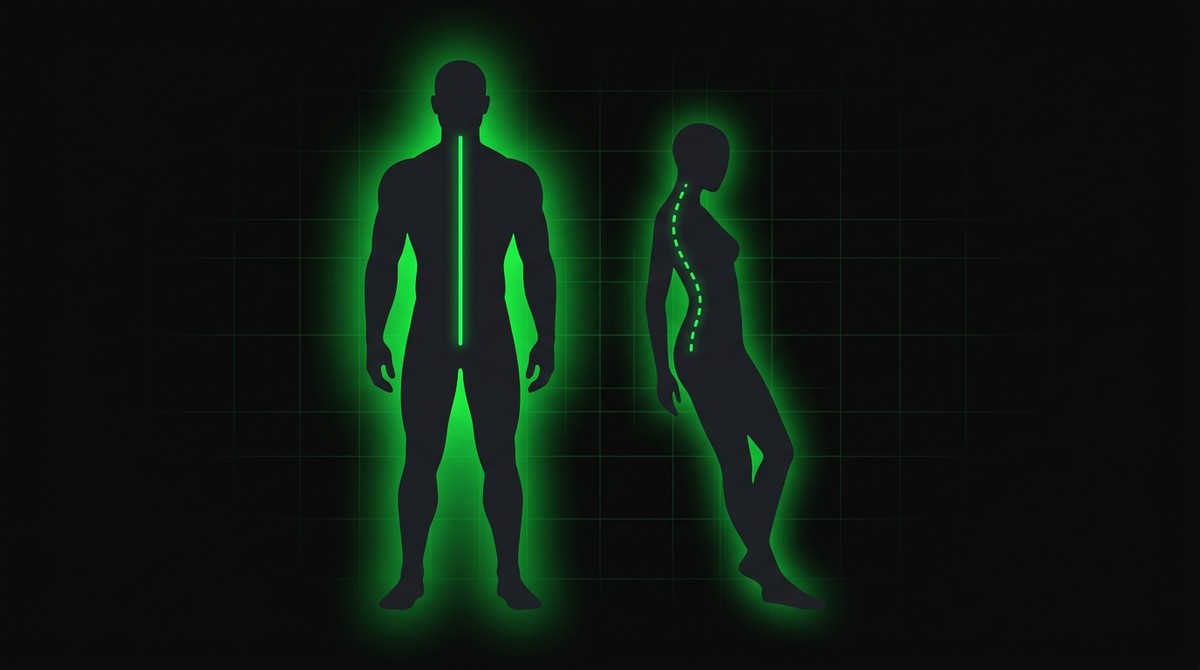
Taylor Swift & Travis Kelce Meet the Green Line Test
When the biggest pop star on the planet started dating a Super Bowl-winning tight end, the internet did what it does best: it grabbed a virtual marker and started drawing lines. The Green Line Test on Taylor Swift and Travis Kelce photos became instant content, racking up millions of views across TikTok and X.
So what does the test tend to show for this couple? Let's break it down in the most important way possible: for fun. This is entertainment, not analysis. If you want the science, we'll point you there too.
A Quick Refresher on the Green Line Test
If you're new here, the Green Line Test works like this:
- Take a couple photo where both people are standing side by side
- Draw a vertical green line along each person's spine
- Compare the angles — a straighter line gets labeled "STRONG," a tilted line gets "WEAK"
- Argue about it in the comments forever
The theory claims the person leaning in is more emotionally invested. It's a catchy idea, but as we'll see, it's not how body language actually works. For a full walkthrough, check our how-to guide.
What a Green Line Test on Swift & Kelce Tends to Show
Here's the honest, observable pattern people notice when they run the test on this pair's public photos, without inventing anything private.
Travis is significantly taller. Kelce stands around six-foot-five, while Swift is closer to five-foot-ten. In almost any two-person photo with that kind of height gap, the taller person often tilts or dips slightly to close the distance for the frame. That's basic photo geometry, not a relationship confession.
Both often appear engaged and mirrored. In a lot of shared shots, both people angle toward each other, smile, and match energy. When both lines tilt inward, that's what fans call a "both leaning" result — and it's one the toxic version of the theory has no idea what to do with. We cover that scenario in what it means when both people lean.
The result flips photo to photo. In one shot Travis looks "STRONG," in the next Taylor does, in the next they both do. That inconsistency is the whole point: a single frame is a frozen millisecond, not a verdict.
If you want to see how wildly celebrity results swing, our celebrity examples roundup is a fun rabbit hole.
Why the Height Difference Breaks the Test
The Swift-Kelce pairing is basically a live demonstration of the test's biggest flaw. When one partner is much taller, leaning is almost required to fit a portrait — nobody wants a photo where one head floats a foot above the other.
We dug into exactly this in our height difference guide: the taller partner leaning down reads as "weak" on the test, when really it's just courtesy and composition. Run the test on any tall-plus-short couple and you'll see the same thing.
What Body Language Experts Actually Say
Here's the part the viral videos skip. Leaning toward someone isn't a sign of weakness — it's usually a sign of warmth and interest.
- Patti Wood, a body language expert, notes that leaning in signals engagement and closeness, not submission.
- Dr. Lillian Glass has called the Green Line Test "simply not true" as a diagnostic tool.
- Dr. Albert Mehrabian's research on nonverbal communication shows that immediacy behaviors — leaning in, orienting toward a person — reflect liking, not a power deficit.
In other words, a lean often means "I'm into this," which is the opposite of the story the test tries to sell. For the full expert breakdown, read what body language experts say about couple photos and our deeper dive into the psychology and science.
About Those "Alpha" Origins
You may have seen the Green Line Test framed with a "who has the power" or "alpha" spin. That framing traces back to some corners of the internet obsessed with ranking, and it's worth calling out plainly: it's nonsense. Sorting partners by spine angle to decide who "controls" a relationship is neither accurate nor healthy.
Warm, mutual leaning is a good thing. If you want to understand why the competitive version of the theory misses the mark, our piece on whether the green line test is toxic tackles it head-on.
The Verdict: It's a Meme, Not a Metric
| What the test "measures" | What's really going on |
|---|---|
| Who is "weaker" | Who is taller and adjusting for the photo |
| Emotional dependence | A friendly lean, a candid moment, or a camera angle |
| Relationship future | Absolutely nothing predictive |
Swift and Kelce are a perfect case study because the test gives you a different answer in every photo. That's your sign to enjoy it as a game and not read a horoscope into a hamstring.
Try It Yourself (Just for Fun)
Want to run the Green Line Test on your favorite celebrity couple photo — or your own? Our AI tool draws the lines and adds the labels in seconds, no marker required. Just remember: it's a party trick, not a prophecy.