
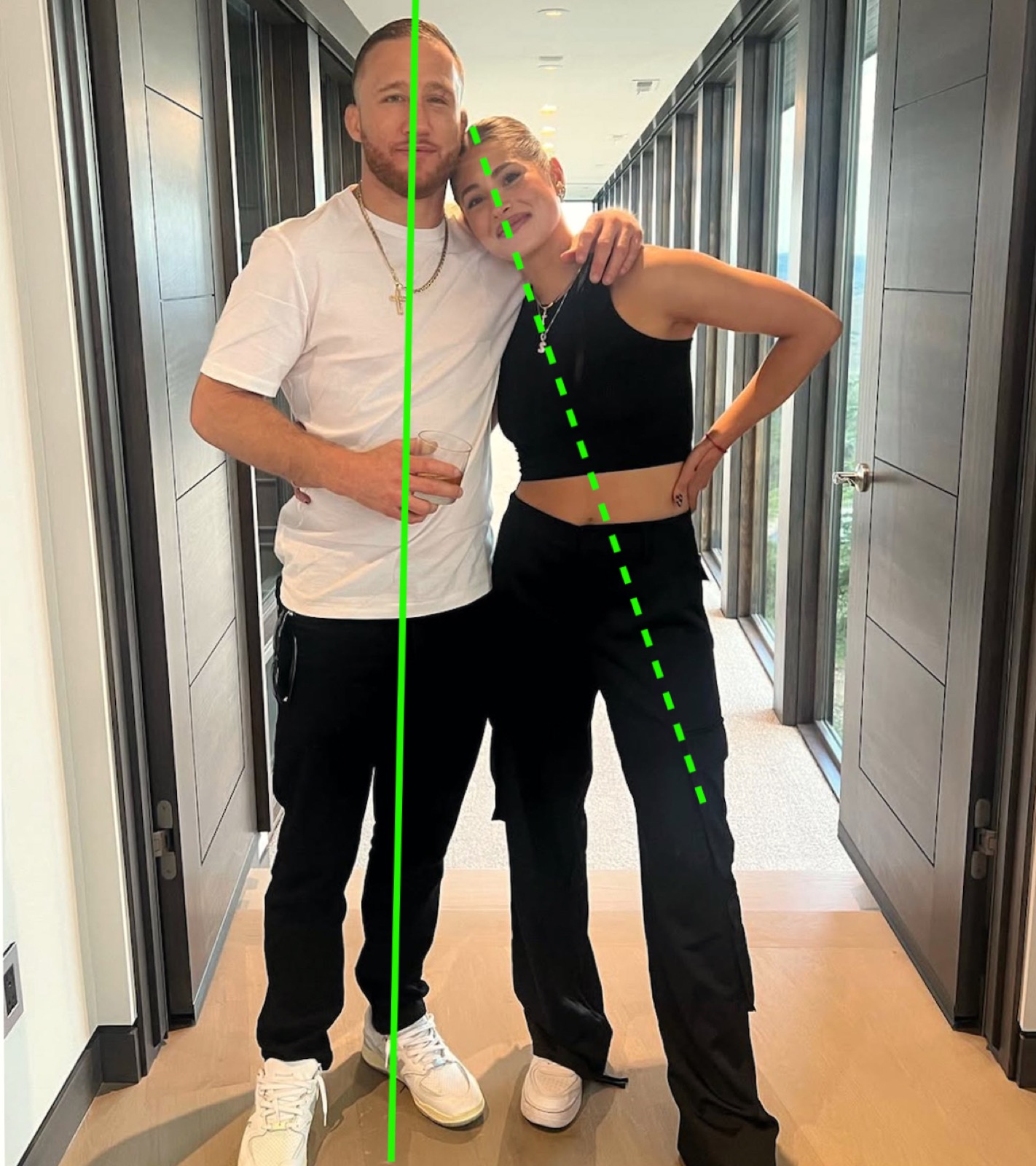
The One Rule Everyone Repeats: Don't Lean In
If you have scrolled the Green Line Test TikTok trend, you have seen the single piece of advice that shows up in every comment section: don't lean in. The theory goes that if you stand perfectly upright, the AI draws a straight, solid green line down your spine and stamps a satisfying STRONG label next to you.
So consider this your fun, low-stakes guide to gaming the green line. Think of it like posing for a better photo, not winning some imaginary contest against your partner. We will get you a straight line for the laughs, and we will stay honest about what it actually means (spoiler: not much). New to all this? Start with what the green line test is and come right back.
Quick Reminder: This Is a Party Trick
Before we coach your posture, a reality check. The green line is entertainment, full stop. It measures which way your torso happens to tilt in one frozen millisecond, not your confidence, your worth, or your relationship. Body language experts are clear that leaning toward someone usually signals warmth and interest, not weakness. Want the full breakdown? Read what body language experts actually say about couple photos and our take on whether the test is toxic.
Also worth knowing: the trend has murky origins built around "who has the power." We are ignoring all of that. Nobody is winning anything here. You are just posing for a straighter line because it is funny.
The Straight-Line Posing Checklist
Here is how to stand so the AI reads your posture as a clean vertical. None of this is deep science. It is just good photo posture that happens to please the algorithm.
- Stack your head over your hips. Imagine a string pulling the top of your head straight up toward the ceiling. Your ears, shoulders, and hips want to line up in one column.
- Even out your weight. Plant both feet and split your weight 50/50. Popping one hip or shifting onto a single leg tilts your whole frame and tips the line.
- Roll your shoulders back and down. Not stiff and military, just open. Rounded shoulders drag the line into a slouch.
- Keep your chin level. Tilting your head toward your partner is the most common way a "strong" pose quietly turns "weak."
- Leave a sliver of space. You can still be close and affectionate. Just avoid collapsing your full body weight sideways into them.
Do those five things and your green line comes out vertical. It really is that simple.
The Height-Difference Trap
The single biggest reason people "fail" the green line is not attitude, it is height. When one partner is much taller, the shorter person naturally cranes and leans up, and the AI reads that tilt as leaning. It is geometry, not devotion. We cover this fully in green line test and height difference, but the quick fixes are below.
| Situation | Quick posing fix |
|---|---|
| Big height gap | Taller person bends knees slightly, or the shorter one steps onto a small ledge |
| Shooting from below | Raise the camera to chest height so nobody has to angle up |
| Snuggled close | Touch shoulders, keep both spines vertical |
| Sitting down | Sit back into the seat, both feet planted, don't slump toward each other |
For seated shots specifically, our green line test on sitting photos guide has more, since couches are a green-line minefield.
Both of You Can Stand Tall
Here is the fun part the trend loves to skip: it is not a zero-sum game. Both people can get straight, solid lines at the same time. When you both stand tall with even weight, you both get STRONG, and the whole "winner and loser" framing falls apart. We dig into that in what it means when both people are leaning. Honestly, two matching upright lines is the most wholesome result you can get.
Or... Just Lean In Anyway
Real talk: a slight lean often makes for a warmer, more natural photo. If your instinct is to tuck into your person, that is a good instinct, and it does not mean anything is wrong. A dashed "weak" line is not a diagnosis. If you are curious what the labels supposedly mean, read what green line test results actually mean, then take it with a big grain of salt.
The best move? Take two photos. One where you both stand tall for the "STRONG" bit, and one where you lean in because you actually like each other. Run both, laugh at the contrast, and move on with your day.
Try Your Poses
Now put your new posing skills to work. Snap a straight-and-tall version, then a cozy lean-in version, and compare the lines side by side by running your own photos.